The Future of Multi-Agent Systems (And Why Businesses Need Them Now)
Multi-Agents
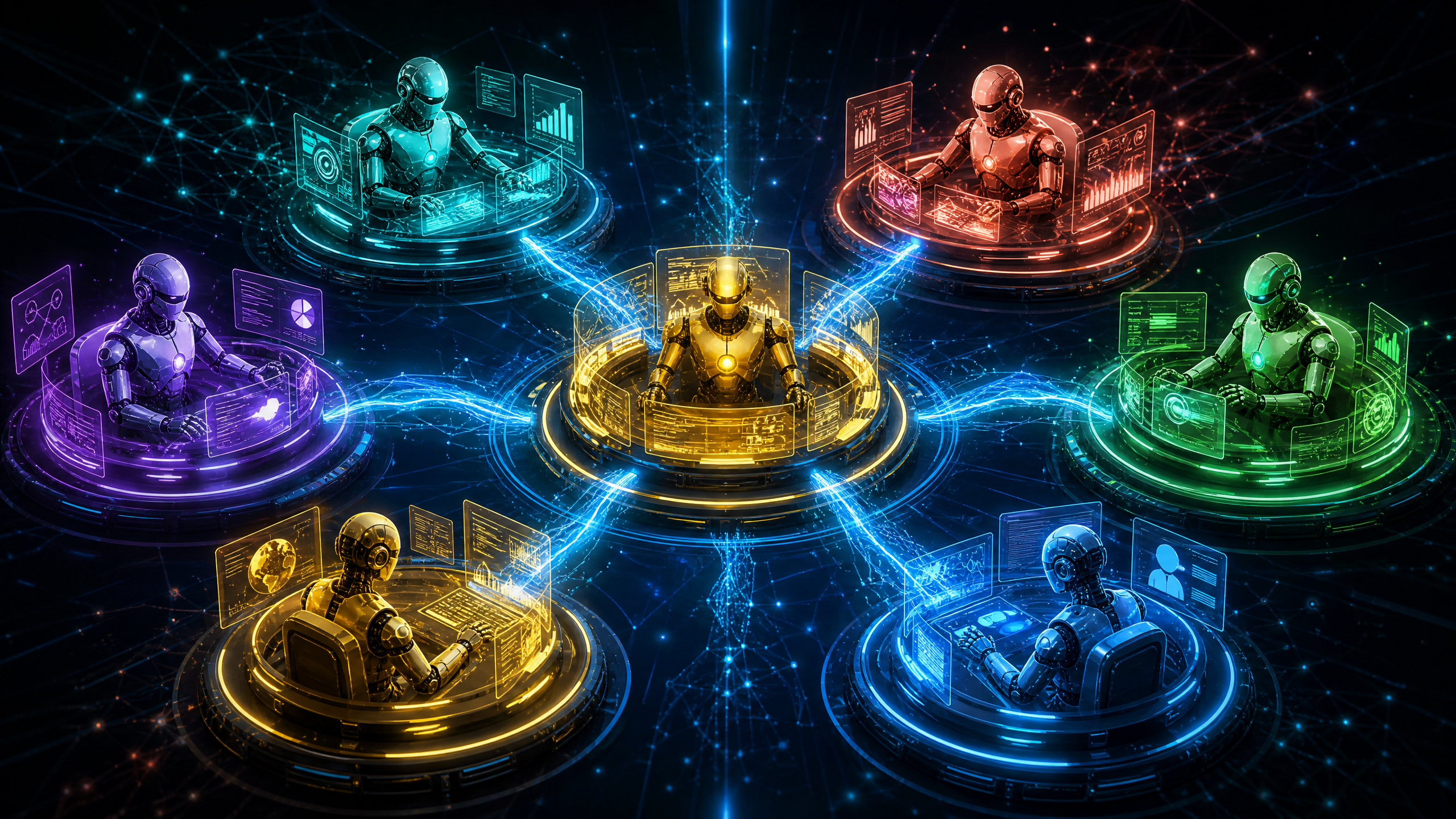
Artificial intelligence has evolved into a fundamental business utility. Initially, organizations adopted single-agent AI models designed for narrow tasks. While these standalone tools offered incremental gains, they failed to address the complex, interconnected nature of modern business operations. The next major paradigm shift in enterprise technology is the orchestration of multiple AI systems working in perfect synchronization.
Welcome to the era of Multi-Agent Systems (MAS). A multi-agent system is a network of specialized, autonomous AI agents that communicate, collaborate, and execute complex workflows. For forward-thinking executives, deploying AI agents for business in a coordinated network is the ultimate strategy for future-proofing operations. This article explains the mechanics of multi-agent orchestration, its impact on enterprise scalability, and why adopting this architecture today is critical.
1. Moving Beyond the Single-Agent Bottleneck
A single AI agent, no matter how advanced, is limited by its scope. If you deploy an AI solely to write marketing emails, it cannot analyze the resulting sales data or update your financial ledger. When businesses rely on isolated AI tools, human employees are forced to act as the “glue” between them—manually copying data from the marketing AI and pasting it into the analytics AI.
Multi-agent systems eliminate this human bottleneck. In a MAS architecture, agents communicate directly through secure APIs. The marketing agent launches a campaign and notifies the analysis agent to monitor metrics. When the analysis agent detects a conversion, it pings the finance agent to update the dashboard. This seamless data flow represents the true power of AI business systems, transforming fragmented tools into a unified operational engine.
2. The Power of Specialized Expertise
In human organizations, you do not hire a brilliant graphic designer and ask them to manage your corporate taxes. You hire specialists. The same principle applies to artificial intelligence. A single, generalized AI model attempting to do everything will inevitably produce mediocre results across the board.
Multi-agent systems leverage specialized expertise. You deploy a dedicated AI staff where each agent is fine-tuned for a specific domain. Your legal agent is trained exclusively on contract law, while your customer support agent is trained on empathy. When a complex problem arises, these specialists collaborate. If a customer requests a refund violating policy, the support agent consults the legal agent. This collaborative specialization ensures enterprise-grade accuracy.
3. Hierarchical Orchestration and Manager Agents
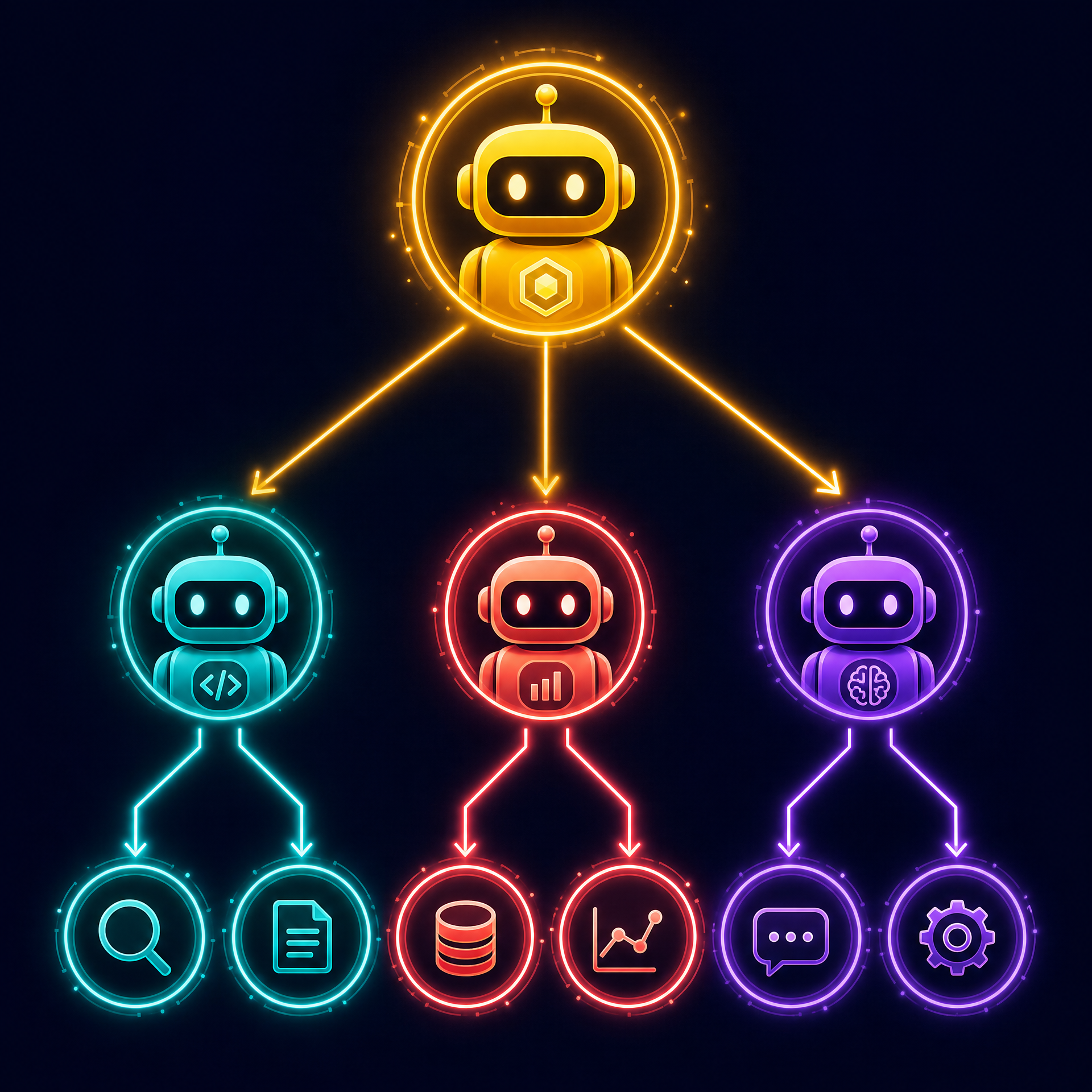
A team of highly skilled specialists will still fail without effective leadership. In a multi-agent system, coordination is managed by a “Manager Agent.” This executive-level AI does not perform ground-level tasks; its sole purpose is to decompose massive goals into actionable sub-tasks and delegate them to the appropriate specialists.
If you prompt a Manager Agent to “Launch a new product campaign,” it springs into action. It instructs the research agent to analyze competitor pricing, commands the copywriter to draft the landing page, and orders the design agent to generate visual assets. The Manager Agent monitors progress, reviews outputs, and synthesizes the final deliverable. This hierarchical structure is the foundation of scalable AI automation for entrepreneurs, allowing owners to operate strategically.
4. Unprecedented Scalability and Elasticity
Human organizations struggle to scale quickly. If your company suddenly lands a massive enterprise contract, you cannot instantly hire, train, and onboard fifty new employees to handle the workload. Scaling human labor is slow, expensive, and fraught with risk.
Multi-agent systems offer infinite elasticity. If your workload spikes overnight, your Manager Agent spawns additional instances of necessary sub-agents to handle the volume. Once the surge subsides, the system scales back down to conserve computing resources. This elasticity ensures operational capacity is perfectly aligned with market demand, eliminating the growing pains associated with traditional expansion.
5. Fault Tolerance and Self-Healing Workflows
In a traditional, linear software workflow, a single error can crash the entire system. If an API endpoint goes down or a database fails to respond, the automation halts, requiring immediate human intervention to troubleshoot and restart the process.
Multi-agent systems are inherently fault-tolerant. Because agents operate autonomously and possess cognitive reasoning, they can actively problem-solve when encountering roadblocks. If a research agent hits a paywall, it does not crash; it informs the Manager Agent, which instructs another agent to find an alternative source. This self-healing capability ensures complex AI workflows execute smoothly even in unpredictable digital environments.
6. Real-Time Strategic Decision Making
Data latency is a silent killer of corporate strategy. By the time human analysts compile data from various departments, generate a report, and present it to the executive team, the information is often weeks old. Making strategic decisions based on stale data is a recipe for disaster.
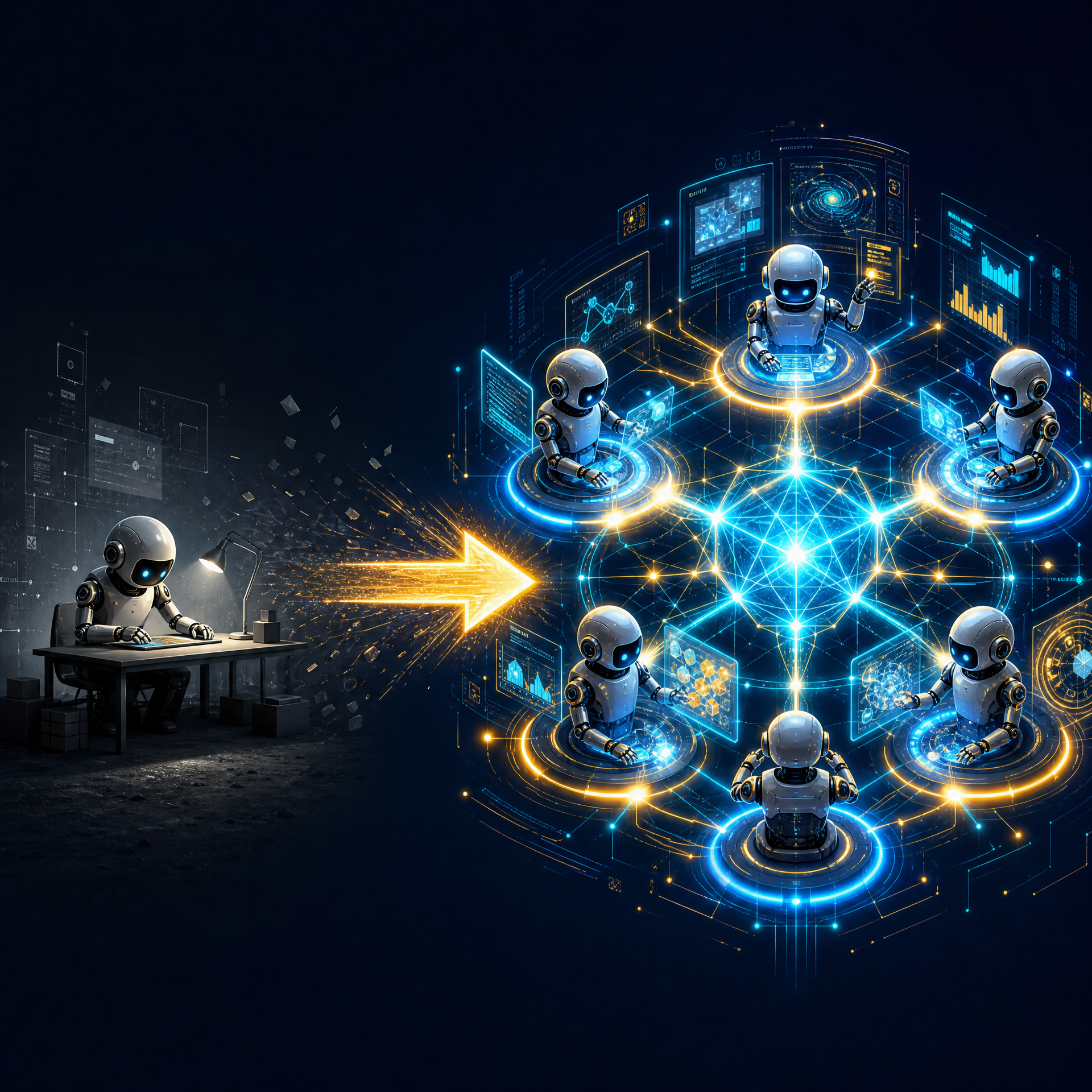
A multi-agent network operates in absolute real-time. Because agents constantly communicate and update shared databases, the executive dashboard is never out of date. Agents can autonomously identify emerging trends and flag them for human review. If a supply chain agent notices a disruption, it instantly notifies the pricing agent to adjust product costs. Organizations like Gartner note that real-time AI decisioning is the primary differentiator between market leaders and laggards.
7. Eliminating Departmental Data Silos
In mid-sized and large enterprises, departments naturally form data silos. The marketing team does not know what the product development team is doing, and the sales team is disconnected from customer support. These silos breed inefficiency and result in a disjointed customer experience.
Multi-agent systems inherently destroy data silos. Because agents share a unified communication protocol, information flows freely across departmental lines. When the customer support agent identifies a recurring bug, it automatically logs a detailed ticket directly into the engineering agent’s queue. This cross-departmental synchronization ensures the entire organization operates as a cohesive unit.
8. Enhanced Security and Access Control
As businesses integrate more AI into their operations, security and data privacy become paramount concerns. Giving a single, generalized AI access to your entire corporate database, including financial records and sensitive customer data, is a massive security risk.
Multi-agent systems solve this through strict compartmentalization. You can implement robust access controls, ensuring the marketing agent only accesses public content, while the finance agent exclusively accesses banking APIs. If a malicious actor compromises the marketing agent, financial data remains isolated. This compartmentalized architecture is a mandatory requirement for enterprise-level AI deployment, a standard echoed by Forbes.
9. The Economic Imperative of Adoption
The transition to multi-agent systems is not just a technological upgrade; it is an economic imperative. The efficiency gains provided by a coordinated AI workforce are so massive that businesses failing to adopt them will simply be priced out of the market.
When competitors deploy a multi-agent system, their operational costs plummet. They offer faster service, better products, and lower prices while maintaining higher profit margins. Attempting to compete against a synchronized AI network using traditional human labor is mathematically impossible. Future-proofing your business means recognizing that multi-agent orchestration is the baseline for survival.
10. The Shift from Operators to Orchestrators
As multi-agent systems take over daily execution, the human role will fundamentally change. We transition from operators performing work to orchestrators directing it.
Business owners will no longer spend days answering emails or updating spreadsheets. Instead, they will focus entirely on strategy, creativity, and relationship building. They will set high-level goals, define ethical boundaries, and allow their multi-agent network to figure out the optimal path to execution. This is the ultimate promise of artificial intelligence: not to replace human ingenuity, but to liberate it from mundane labor.
Secure Your Competitive Advantage Today
The technology required to build and deploy multi-agent systems is no longer restricted to massive tech conglomerates. Platforms are available now, and forward-thinking businesses are leveraging them to dominate their markets.
Waiting for the technology to mature is a losing strategy. Businesses adopting multi-agent orchestration today will build insurmountable leads in data accumulation, workflow optimization, and efficiency. The future of business belongs to those who deploy the smartest networks.

Ready to Deploy Your Multi-Agent Workforce?
Stop relying on fragmented tools requiring constant human intervention. Orchestrate a unified, autonomous digital workforce scaling your business effortlessly.
Try SmartPromptIQ AI Staff free and experience the power of specialized agents working in perfect synchronization.
Download 50 AI Staff workflows to see how a multi-agent system can automate your operations and secure your competitive advantage.
Visit SmartPromptAgents!