AI Agents vs Chatbots vs Workflows: Which One Does Your Business Actually Need?
artificial intelligence
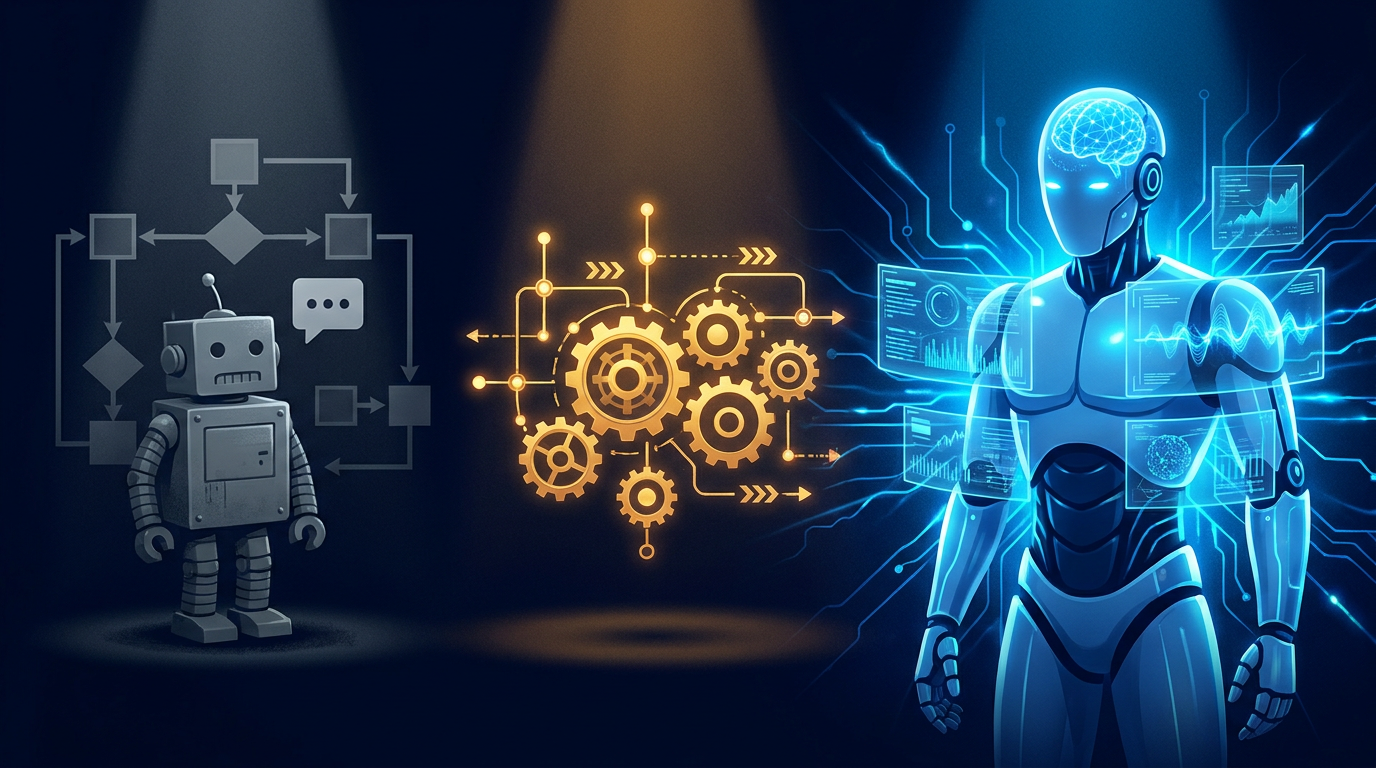
The artificial intelligence market is flooded with confusing terminology. Every software vendor claims their product is “powered by AI,” leaving business owners struggling to differentiate between a simple auto-responder and a truly autonomous digital employee. When you implement AI automation for entrepreneurs, choosing the wrong tool category can result in wasted budget, frustrated customers, and zero operational improvement.
Before you invest, you must understand the fundamental architectural differences between the three main categories of business automation: Chatbots, Workflows, and AI Agents. They are not interchangeable buzzwords; they represent entirely different levels of cognitive capability and execution power. This comprehensive guide dissects exactly how each technology functions, where they fail, and why true AI agents for business represent the ultimate future of enterprise automation.
1. The Legacy Solution: Chatbots
Chatbots have existed for over a decade. They are essentially interactive FAQ documents. A traditional chatbot operates on strict, rigid “if-this-then-that” logic trees. When a customer types a question, the chatbot scans the text for specific keywords and returns a pre-written, scripted response.
The primary limitation of a chatbot is its complete lack of cognitive understanding. If a customer asks a question that deviates slightly from the pre-programmed script, the chatbot breaks, repeatedly apologizing or aggressively trying to route the user to a human agent. Chatbots cannot execute tasks; they cannot process a refund, update a shipping address, or analyze a complex user problem. They only talk. While they were a novel concept in 2016, relying on a basic chatbot today creates more friction than it solves, leading to high customer abandonment rates.
2. The Structural Solution: Workflows
Workflows represent a significant step up from chatbots. A workflow is a sequence of automated actions triggered by a specific event. For example, when a new lead fills out a form on your website, a workflow might automatically add their email to your CRM, send them a welcome email, and notify your sales team via Slack.
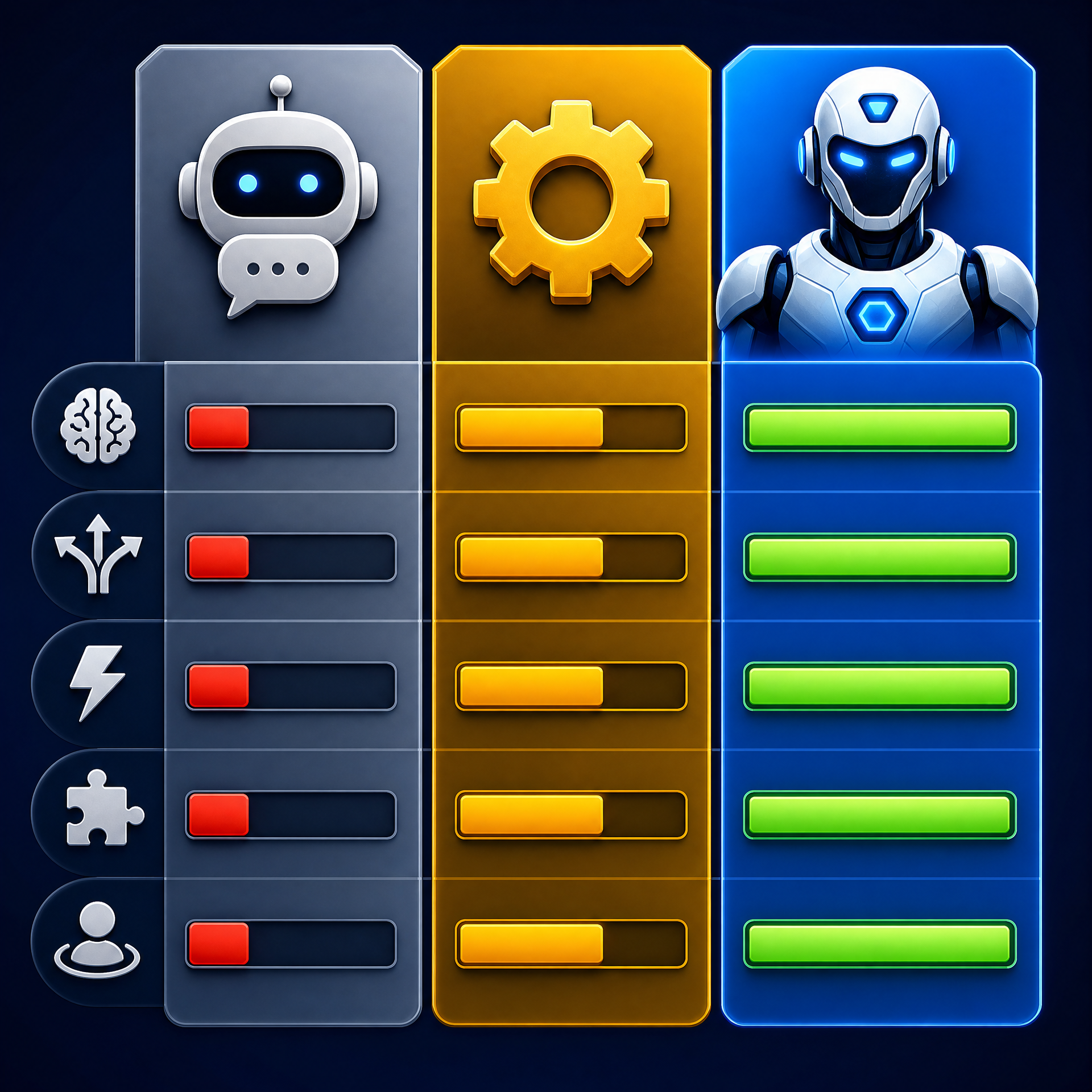
Workflows are incredibly powerful for moving data between different software platforms. They are the backbone of modern AI business systems. However, workflows are fundamentally “dumb” pipes. They require a human to map out every single step in advance. If a step fails, the entire workflow crashes. Workflows cannot adapt, problem-solve, or handle ambiguity. They execute the exact sequence they were programmed to run, nothing more and nothing less.
3. The Cognitive Solution: AI Agents
An AI Agent is the apex of current automation technology. Unlike a chatbot that only talks, or a workflow that only follows a rigid path, an AI Agent possesses cognitive reasoning and autonomous execution capabilities. You do not program an AI Agent with a rigid script; you give it a goal, provide it with tools, and let it figure out how to achieve it.
For example, if you instruct an AI Support Agent to “resolve the customer’s shipping issue,” the agent will independently read the customer’s email, access your shipping database to check tracking status, determine the package is lost, process a replacement order, and draft an apology email. It handles the entire process end-to-end, adapting to roadblocks autonomously. This is why elite companies are rapidly deploying AI staff to replace operational overhead.
4. Handling Ambiguity and Edge Cases
The true test of any automation system is how it handles the unexpected. Business is messy; customers rarely ask perfect questions, and data is often formatted incorrectly.
If a customer asks a chatbot, “Can I wear these shoes in the rain today please?” the chatbot will likely fail because it only recognizes the keyword “shoes.” A workflow cannot handle this because there is no structured data trigger. An AI Agent, however, understands the semantic intent of the question. It will access your product knowledge base, understand the properties of suede, and generate a nuanced, highly specific answer, effectively saving the sale.
5. Execution vs. Conversation
The defining difference between these technologies is execution power. Chatbots are conversational interfaces; they are designed to provide information. Workflows are execution pipelines; they are designed to move data.
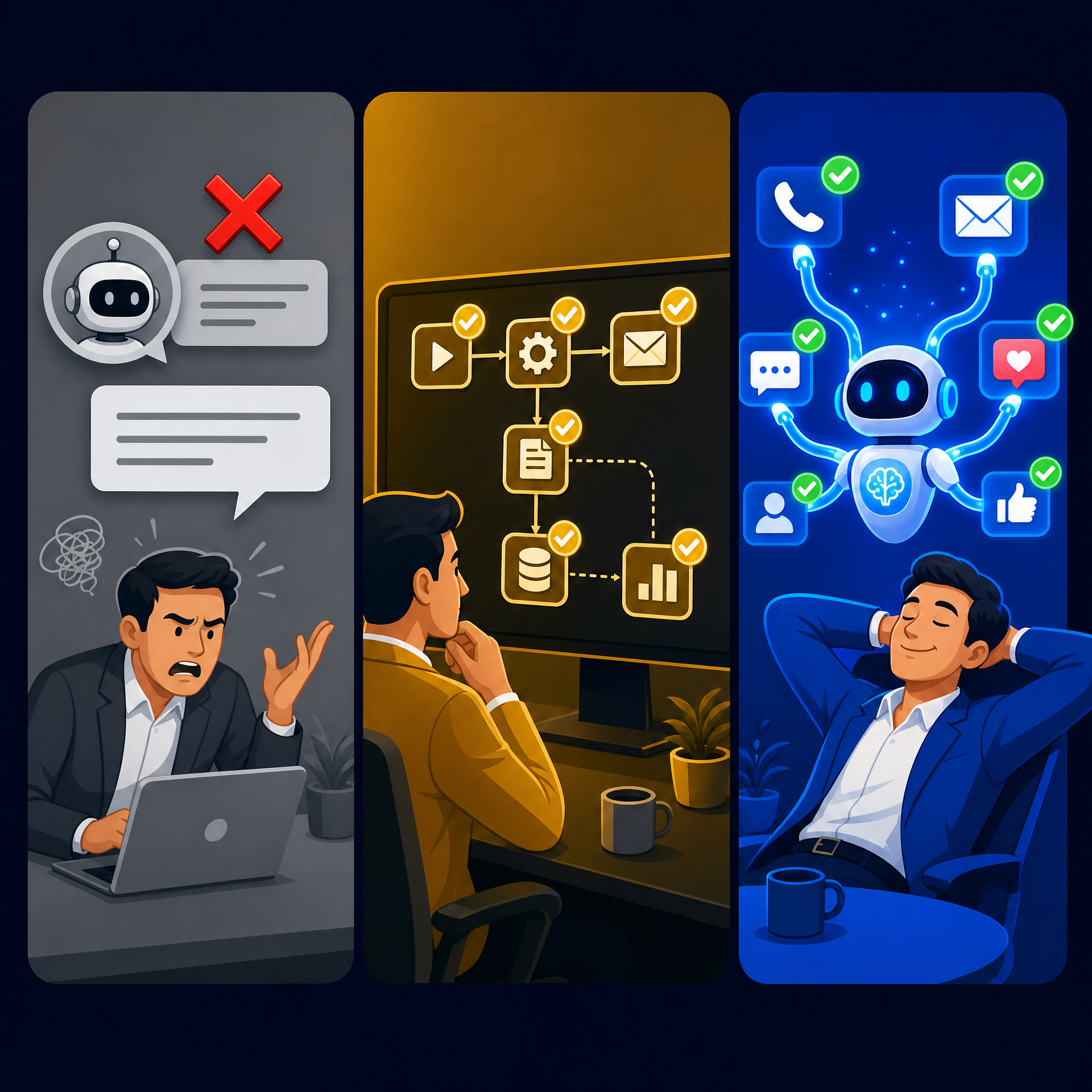
AI Agents combine both. They can converse naturally with a human to gather necessary context, and then they can reach out and interact with your software stack to execute a task. An AI Agent can log into your CRM, update a record, send an email, and process a payment. They are not just talking about the work; they are actively doing the work. This dual capability is what makes them true digital employees rather than just software tools.
6. Memory and Context Retention
A major frustration with chatbots is their lack of memory. If a customer explains their problem, gets disconnected, and reconnects five minutes later, they usually have to explain the entire issue again from scratch.
AI Agents possess persistent memory. They remember past interactions, understand the full context of a customer’s history with your brand, and can reference previous conversations seamlessly. If a customer says, “I want to reorder the same coffee beans I bought last month, but send them to my office instead,” the AI Agent instantly recalls the previous order, accesses the office address on file, and executes the transaction. This level of personalization is highly recommended by analysts at Gartner.
7. The Setup and Maintenance Burden
Implementing traditional workflows requires significant technical expertise. You have to map data fields, configure API keys, and constantly monitor the system for broken connections. If you change your CRM, you have to rebuild all your workflows from scratch.
Deploying AI Agents is vastly simpler. By utilizing intuitive prompt engineering tools, you simply provide the agent with instructions in plain English. You give it access to your tools, and it figures out how to use them. Because agents are adaptable, if a software interface changes slightly, the agent can often figure out the new layout autonomously, drastically reducing your ongoing maintenance burden.
8. Continuous Learning and Improvement
Chatbots and workflows are static. They only improve if a human developer manually goes in and updates their logic or adds new scripts.
AI Agents are dynamic learning systems. Every time an AI Agent interacts with a customer or executes a task, it analyzes the outcome. If an agent escalates a complex ticket to a human manager, it watches how the human resolves the issue. The next time that specific problem arises, the agent handles it autonomously. This continuous self-improvement means your digital workforce becomes faster and more capable every single day without any additional coding.
9. Multi-Channel Omnipresence
A chatbot is usually confined to a little widget in the corner of your website. A workflow operates invisibly in the background.
An AI Agent can exist everywhere simultaneously. The exact same AI brain can answer your business phone lines, reply to customer emails, manage your website live chat, and respond to Instagram direct messages. This ensures that your brand voice, policies, and customer experience remain perfectly consistent regardless of how a customer chooses to contact you, a strategy heavily endorsed by marketing experts at Forbes.
10. The Verdict: What Do You Need?
If you only need to answer five extremely basic questions (like “What are your hours?”), a chatbot might suffice. If you only need to move data automatically from a web form to a spreadsheet, a workflow is perfect.
However, if you want to fundamentally scale your business operations—if you want to handle infinite customer support tickets, qualify leads autonomously, and execute complex administrative tasks without hiring more human employees—you need AI Agents. They are the only technology capable of true cognitive labor.
Upgrade to True Automation
Stop settling for rigid chatbots that frustrate your customers and brittle workflows that constantly break. The future of business belongs to those who deploy intelligent, autonomous agents.
Ready to Deploy Real AI Agents?
Transform your business operations with a workforce that thinks, adapts, and executes tasks autonomously 24/7.
Try SmartPromptIQ AI Staff free today and experience the massive difference between a simple chatbot and a true digital employee.
Download 50 AI Staff workflows to see exactly how elite businesses are utilizing autonomous agents to dominate their markets.
Explore the SmartPromptAgents Marketplace online right now and find the perfect AI Agent to scale your business today!