The Difference Between Chatbots and Real AI Agents (Explained Simply)
Real AI Agents
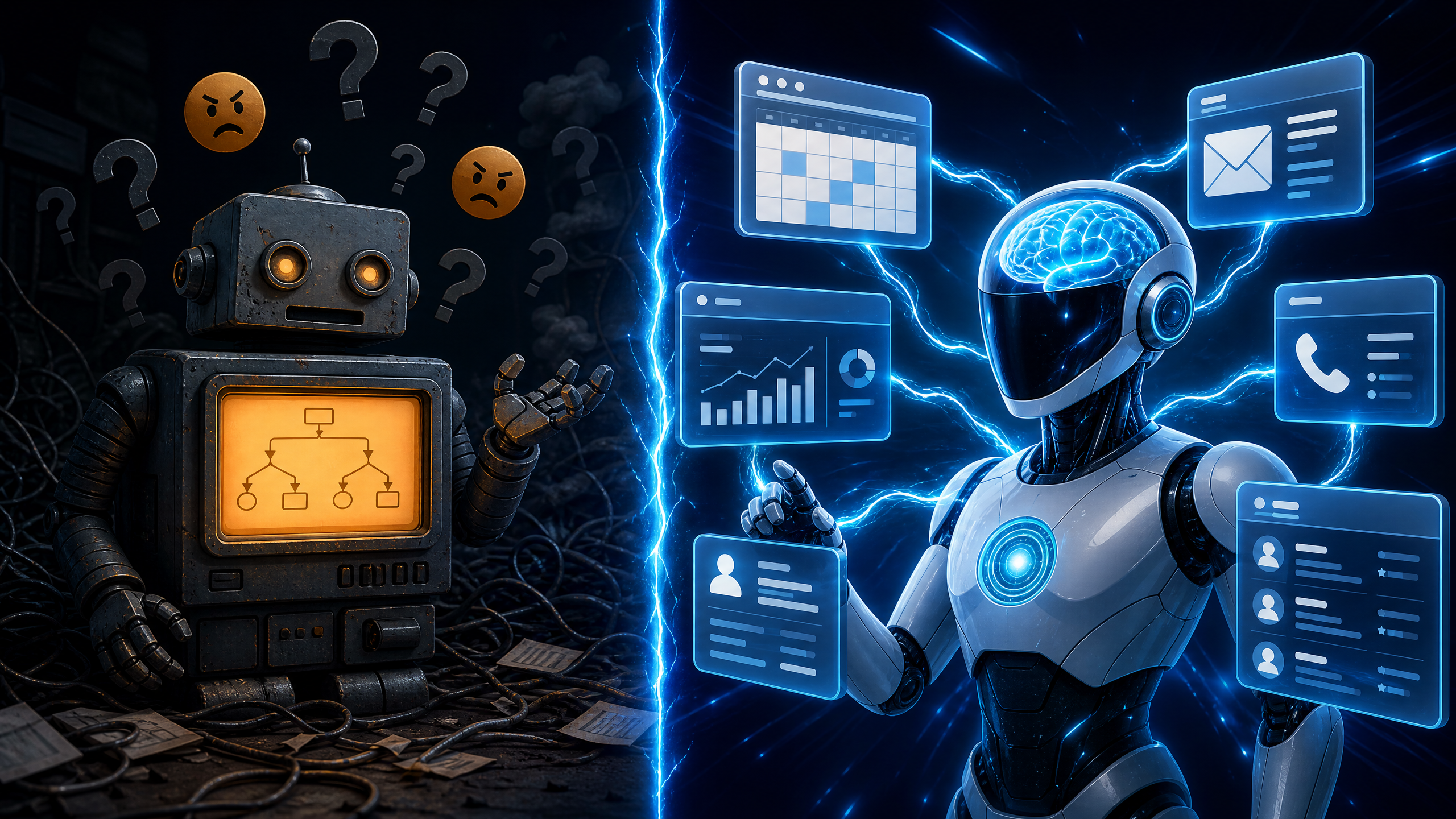
In the rapidly expanding world of artificial intelligence, terminology is frequently misused. Business owners are bombarded with promises of “AI solutions” that will magically solve their problems. However, when they invest in these tools, they often find themselves stuck with rigid systems that fail to deliver. The core of this confusion lies in a fundamental misunderstanding of the technology itself. The distinction between a traditional chatbot and a true AI agent is often blurred by marketing tactics.
Understanding this distinction is critical for any entrepreneur looking to scale operations effectively. A simple chatbot might save you a few minutes answering questions, but a real AI agent can fundamentally transform how your business operates. By implementing AI agents for business, you move beyond simple automated replies and enter the realm of autonomous execution. This article will explain what separates these two technologies and why making the right choice is vital.
1. The Rigid Rules of Chatbots
A standard chatbot is essentially a digital flowchart operating on strict logic programmed by a human. When a customer types a question, it scans for specific keywords and delivers a pre-written response.
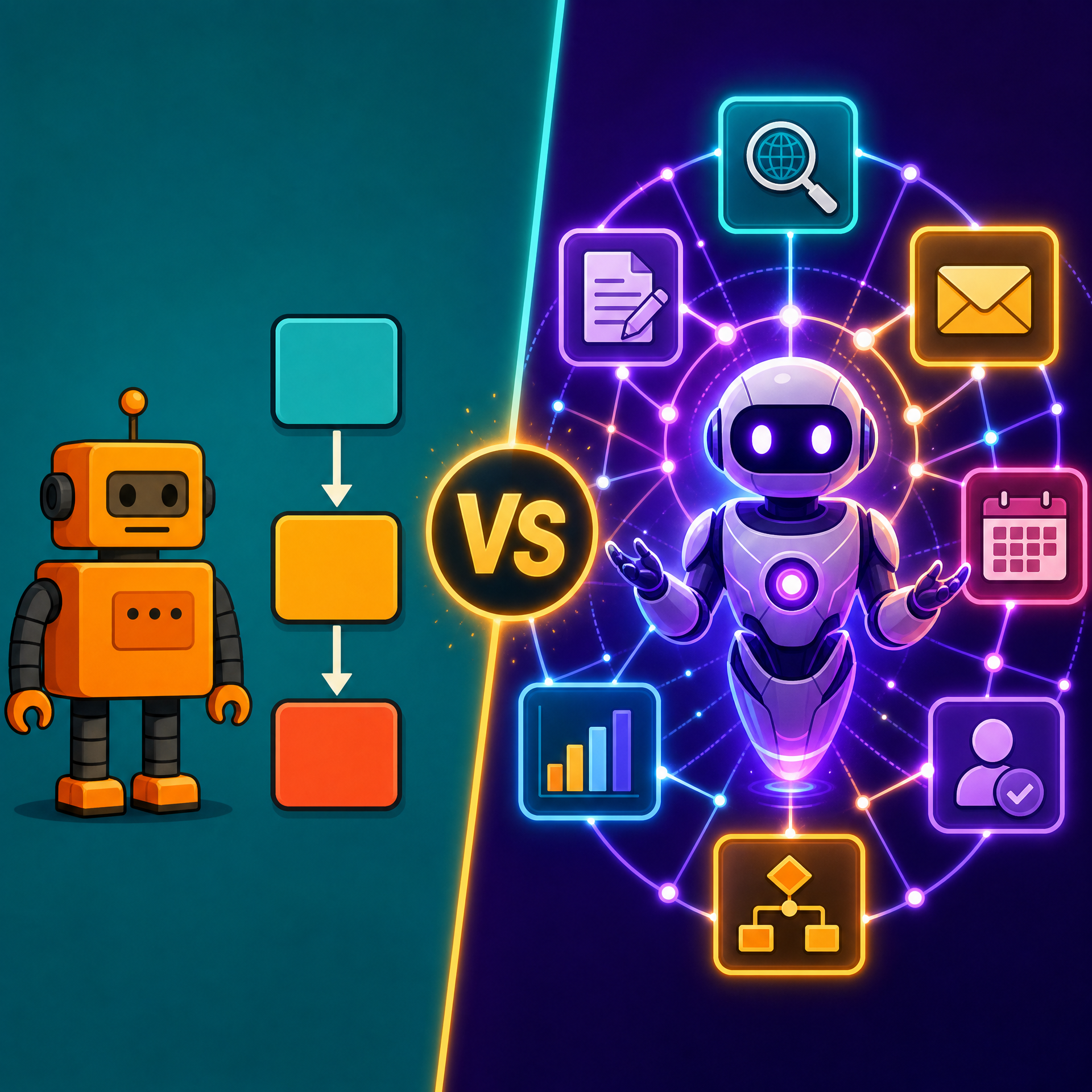
If the customer asks a question that deviates from the programmed script, the chatbot fails. It usually responds with a frustrating error message. This rigid structure makes chatbots incredibly fragile. They cannot handle nuance, context, or complex multi-part questions. They are useful for basic triage, but cannot hold a genuine conversation or solve complex problems without human intervention. According to Gartner, basic chatbots suffer from high customer abandonment rates due to these exact limitations.
2. The Cognitive Power of AI Agents
A real AI agent operates on an entirely different paradigm. Instead of relying on a rigid script, an AI agent utilizes large language models and neural networks to actually understand the intent behind a user’s request. It does not just look for keywords; it comprehends context, tone, and nuance.
When you interact with a true AI agent, it feels like speaking with a knowledgeable human employee. If a customer asks a complex question, the AI agent can break it down, analyze the components, and generate a comprehensive response on the fly. It does not rely on pre-written templates. This cognitive power allows AI staff to handle sophisticated customer service scenarios that would cause a traditional chatbot to crash instantly.
3. Execution vs. Conversation
A chatbot is purely conversational. Its only function is to display text on a screen. If a customer asks a chatbot to book an appointment, the chatbot might provide a link to a scheduling page, but it cannot perform the booking itself.
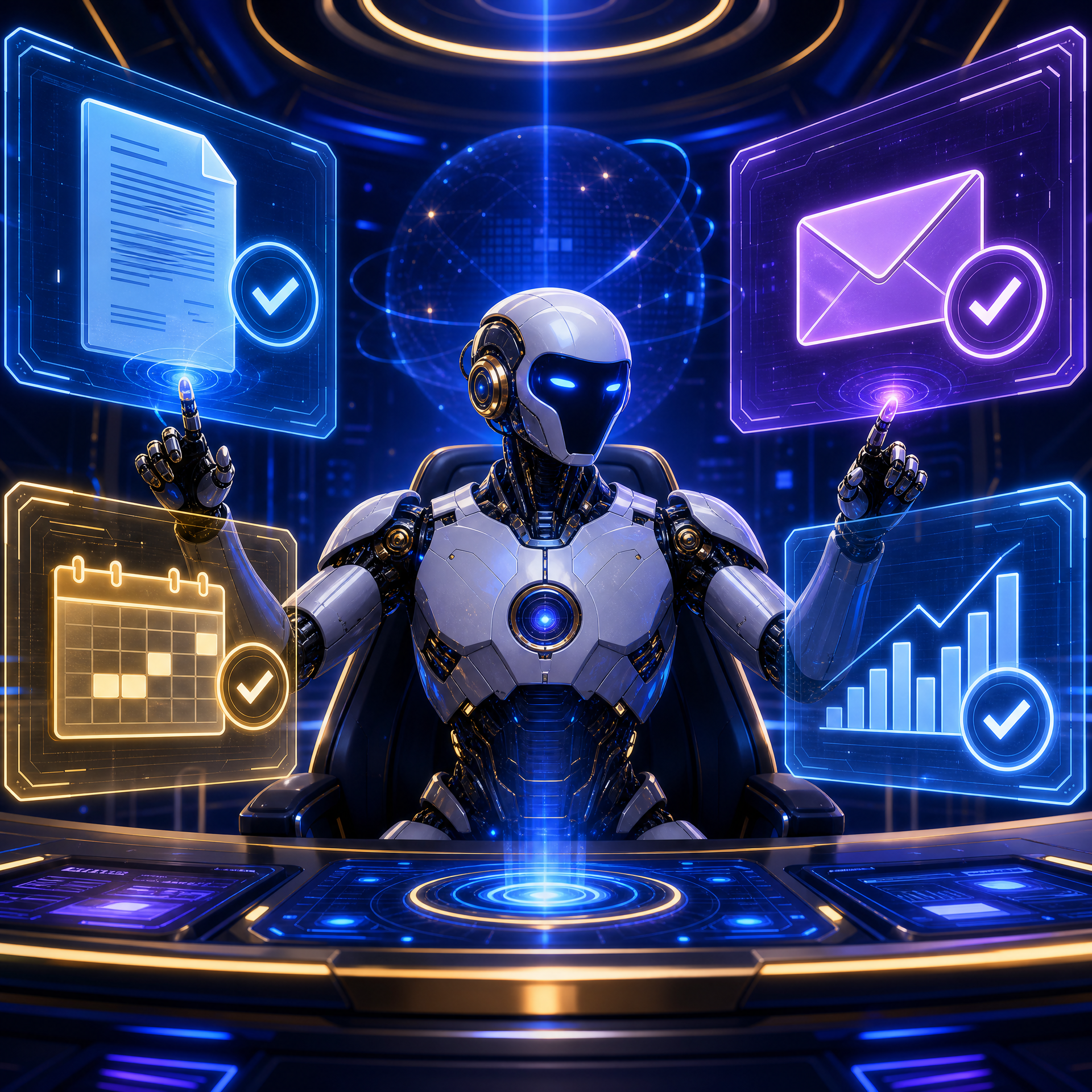
A real AI agent is an executor connected to your software ecosystem through APIs. If a customer asks an AI agent to book an appointment, the agent accesses your calendar, finds an open slot, confirms the time, and writes the appointment into your scheduling software. It can also update your CRM and send a confirmation email. By utilizing integrated AI workflows, these agents perform actual labor, taking tangible tasks off your plate.
4. Memory and Context Retention
Have you ever interacted with a chatbot, answered questions, and then been transferred to a human only to repeat the same information? This happens because traditional chatbots have zero memory. They treat every input as an isolated event and cannot remember what was said two sentences ago.
Real AI agents possess robust memory and context retention. They remember the entire history of the conversation. If a customer mentions their account number at the beginning of a chat and asks for a balance update later, the AI agent pulls the correct data immediately. This seamless context retention creates a frictionless experience that builds trust. Platforms like HubSpot emphasize that context retention is the defining feature of modern customer experience automation.
5. Learning and Adaptation
A traditional chatbot is static. It will only ever know what a human programmer explicitly teaches it. If your business launches a new product, you must manually go into the chatbot’s backend and write new rules, keywords, and responses to cover that product. Until you do, the chatbot is completely ignorant of the change.
AI agents are dynamic and adaptable. They can be trained on your entire company knowledge base. If you launch a new product, you simply upload the new product manual. The AI agent instantly reads, comprehends, and integrates this new information, ready to answer complex questions immediately. This continuous learning capability ensures your AI business systems are always up-to-date without constant manual reprogramming.
6. Proactive vs. Reactive Behavior
Chatbots are entirely reactive. They sit silently on a webpage, waiting for a user to initiate a conversation. They cannot anticipate needs or take action without a direct prompt from a human.
Real AI agents can be proactive. They can monitor data streams and take action independently based on specific triggers. For example, an AI agent can monitor your inventory levels. If it notices a product is running low, it can proactively draft a reorder request and send it to your supplier. This proactive behavior transforms the AI into a dedicated digital employee that actively manages operations.
7. Handling Ambiguity and Edge Cases
In the real world, customers rarely ask questions perfectly. They use slang, make typos, and ask vague, confusing questions. A chatbot requires precise input to function. If a customer says, “My thingamajig is broken,” the chatbot will fail because “thingamajig” is not in its keyword database.
An AI agent excels at handling ambiguity. It uses semantic understanding to deduce what the customer means. It can ask clarifying questions to narrow down the issue, just like a human support rep would. This ability to navigate edge cases ensures that customers receive help even when they cannot articulate their problem perfectly.
8. Multi-Channel Omnipresence
A traditional chatbot is usually confined to a single platform, typically a widget on the bottom right corner of your website. If a customer messages you on Facebook, emails your support address, or sends an SMS, the website chatbot cannot help them.
Real AI agents offer multi-channel omnipresence. The exact same AI brain can be connected to your website chat, email inbox, social media accounts, and phone lines. This means a customer receives the exact same high-quality support regardless of how they choose to contact your business. This unified approach to AI automation for entrepreneurs ensures a consistent brand experience.
9. Goal-Oriented Problem Solving
Chatbots answer questions; AI agents achieve goals. If a customer wants a refund, a chatbot merely provides the refund policy text.
If a customer contacts an AI agent for a refund, the agent verifies identity, checks policy rules, processes the refund, updates the CRM, and sends an email. The agent understands the ultimate goal and executes all necessary sub-tasks autonomously.
10. The True Cost of Implementation
Many business owners choose chatbots because they appear cheaper upfront. However, the hidden costs are substantial. You must spend hours programming it, constantly update its rules, and deal with the fallout of frustrated customers who abandon purchases due to poor support.
Investing in a real AI agent provides an immediate return on investment. While the underlying technology is complex, platforms have made deployment incredibly simple. You do not need to be a programmer to launch a sophisticated agent. By deploying a true AI workforce, you eliminate manual data entry, reduce support ticket volume, and capture more leads.
Stop Chatting, Start Executing
The era of the frustrating, rigid chatbot is over. For small businesses looking to scale, relying on outdated logic is a massive liability. Your customers expect fast, intelligent service, and your operations require autonomous execution to remain competitive.
Understanding the difference between a chatbot and an AI agent is the first step toward operational freedom. An AI agent works. It thinks, remembers, executes, and learns. It is a digital employee operating 24/7 to grow your business.
Ready to Hire a Real AI Agent?
Stop programming rigid chatbots that frustrate customers. Deploy an intelligent workforce executing tasks.
Try SmartPromptIQ AI Staff free today and experience the difference between a simple chatbot and an autonomous AI agent.
Download 50 AI Staff workflows to see how real agents automate your entire business operation.
Visit SmartPromptAgents today!